
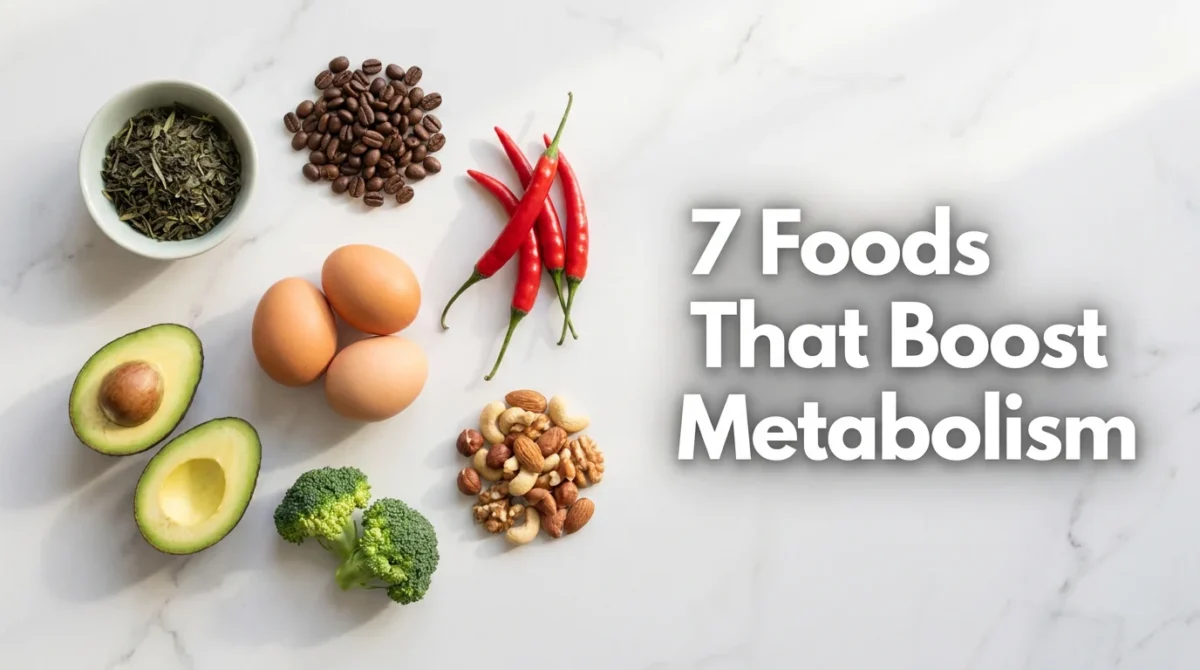
These 7 foods that boost metabolism are everyday ingredients, from green tea to almonds. Here is what nutrition research says about each one.
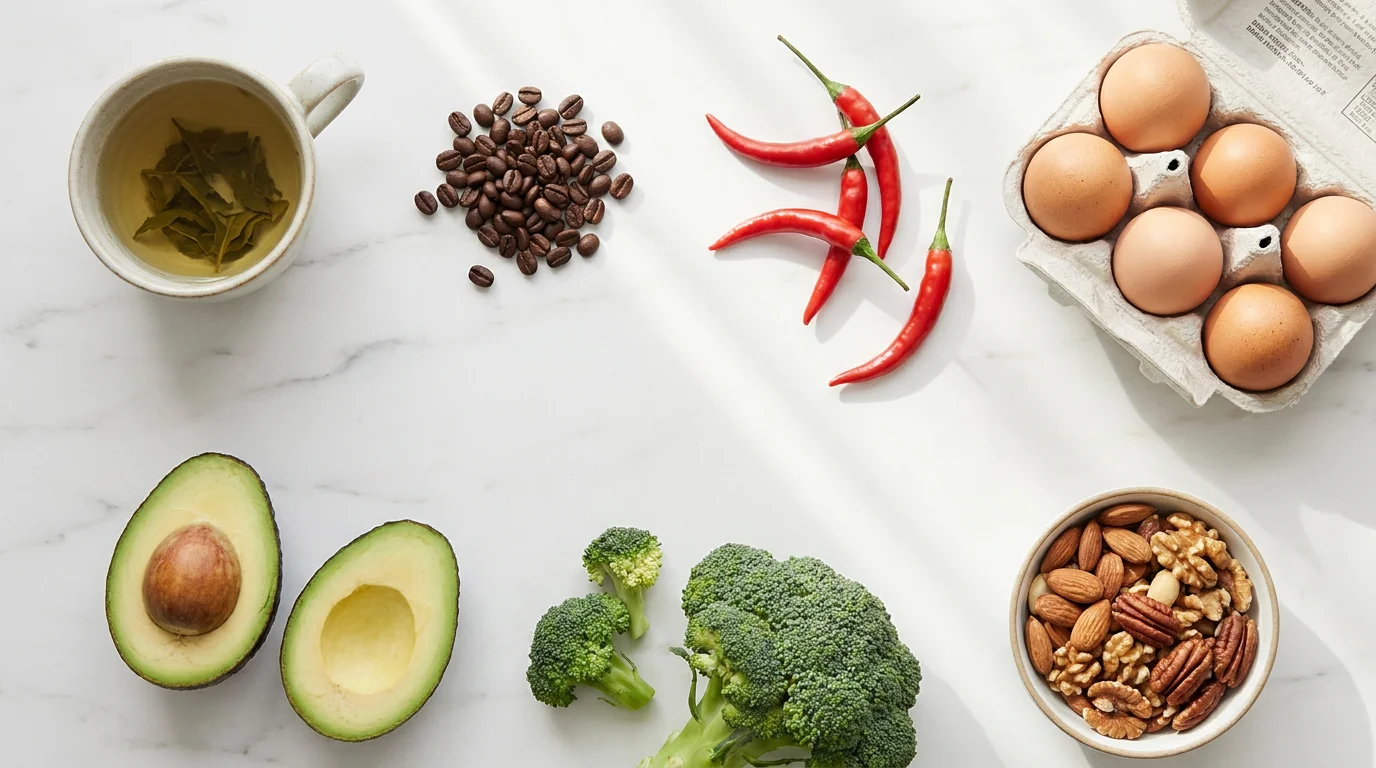
7 Foods That Boost Metabolism: What Nutrition Research Says About Each One
Metabolism is shaped by nutrition, lifestyle and internal biological processes. Here are 7 foods that boost metabolism, with a plain-language look at what is known about each.
If your energy feels inconsistent or your body responds to food differently than it did a few years ago, what you eat is a good place to look. Each of these 7 foods that boost metabolism has a well-known nutrient profile, and some have been studied for their effect on energy use.
Here is a straightforward look at each of the 7 foods that boost metabolism, and an easy way to fit them into your day.
7 Foods That Boost Metabolism: A Closer Look at Each One
1. Green Tea
Green tea contains EGCG (epigallocatechin gallate), a natural plant compound that researchers have studied for its role in energy use. A 2009 meta-analysis found a small positive effect of green tea catechins with caffeine on weight loss and weight maintenance, and a Cochrane review looked at green tea preparations for weight loss and maintenance in adults.
Beyond the research, green tea is a low-calorie drink that is easy to enjoy hot or iced.
Plain, unsweetened green tea keeps added sugar out of your cup.
2. Coffee
Caffeine is a stimulant, and coffee is one of the most studied drinks in nutrition research. A 2019 meta-analysis of 13 randomized trials concluded that caffeine intake might promote weight, BMI and body fat reduction.
Mayo Clinic says up to 400 mg of caffeine a day, about four cups of brewed coffee, seems safe for most adults. Black coffee, or coffee with a splash of milk, keeps added sugar low.
Many people prefer coffee after a glass of water and a bit of food.3. Chili Peppers
Capsaicin is the compound responsible for the heat in chili peppers. A 2012 systematic review in Appetite of capsaicinoids and capsinoids reported an increase in energy expenditure of roughly 50 calories a day, and discussed a possible role in fat oxidation.
Chili peppers add flavor without adding many calories, which makes them an easy way to season eggs, soups and vegetables.
Start with a small pinch of chili flakes and add more to taste.4. Eggs
Eggs are a convenient source of complete protein, with about 6 g per large egg. Mayo Clinic notes that about 10% of all the calories you eat go toward digesting food and absorbing nutrients, and protein is one of the nutrients your body works to digest.
Protein also helps you feel satisfied after a meal, and it supports the muscle that plays a key role in how many calories you burn at rest.
Two eggs at breakfast provide about 12 g of protein.5. Avocados
Avocados provide monounsaturated fat and fiber, and they add creamy texture to salads, toast and eggs. They are calorie-dense, so a portion of about half an avocado is a common serving.
Fiber and healthy fats are part of a balanced plate, and pairing them with protein and vegetables makes a satisfying meal.
Half an avocado fits easily into lunch.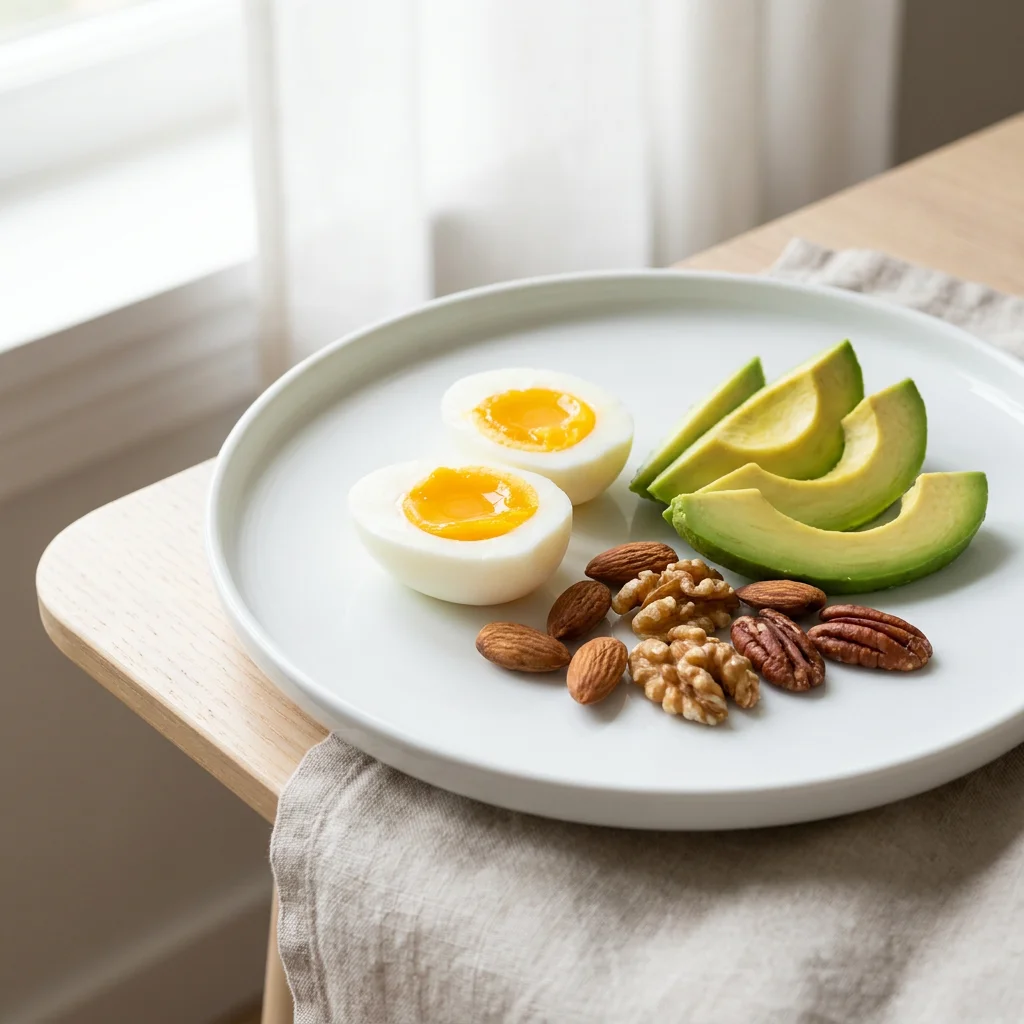
6. Broccoli
Broccoli is a cruciferous vegetable. Mayo Clinic describes it as providing phytonutrients, along with vitamin C that helps your body absorb iron from other foods.
It is also high in fiber and low in calories, which makes it an easy way to add volume and nutrients to a meal.
Lightly steamed or roasted broccoli keeps a pleasant texture and flavor.7. Nuts
Nuts, particularly almonds, provide protein, fiber and healthy fats. The NIH Office of Dietary Supplements lists almonds as a source of magnesium, with about 80 mg in a 1 oz serving, and notes that magnesium is a cofactor in more than 300 enzyme systems in the body.
Mayo Clinic adds that most of the fat in almonds is monounsaturated, and suggests watching portions because nuts are calorie-dense.
A small handful of almonds (about 1 oz) is a simple between-meal snack.How to Add These 7 Foods That Boost Metabolism to Your Day
Knowing the foods is one thing. Fitting them into the day in a way that feels easy is what makes them a habit.

Easy Ways to Fit Each of the 7 Foods That Boost Metabolism Into Your Day
- Morning: Green tea or coffee, ideally with water and a bit of food if that suits you
- Breakfast: Eggs with avocado or a pinch of chili flakes
- Lunch: Broccoli alongside a protein source and a drizzle of olive oil
- Mid-afternoon: A small handful of almonds
- Before a workout: Coffee or green tea, if you enjoy it and tolerate caffeine well
Used together, these 7 foods that boost metabolism make a varied, colorful plate. Choose the ones you enjoy and build from there.
Foods That Boost Metabolism After 30: The Bigger Picture
These 7 foods that boost metabolism are one part of a bigger routine. After 30, several other factors shape how your body uses energy:
- Muscle: Mayo Clinic notes that muscle mass tends to fall with age, and muscle plays a key role in the calories you burn at rest
- Activity: the CDC recommends 150 minutes of moderate activity a week plus 2 days of muscle-strengthening activity for adults
- Stress: according to Mayo Clinic, stress can change the way your body functions in ways that lead to weight gain
- Pace: the CDC describes gradual weight loss of about 1 to 2 pounds a week as a realistic pace
If you are curious about a simple morning ritual that many women over 30 pair with these foods, our guide explains it step by step.
Related Reading
7 Foods That Boost Metabolism: A Simple Foundation to Build On
These 7 foods that boost metabolism make a flavorful, balanced base for everyday meals. Start with the ones you already enjoy.
Pair them with movement, sleep and stress care, and bring any questions about supplements or your own needs to your healthcare provider.
P.S. Start with one of the 7 foods that boost metabolism, such as eggs at breakfast or green tea in the morning, and build from there.
This content is for informational purposes only and does not constitute medical advice. Individual results may vary. These statements have not been evaluated by the Food and Drug Administration. Always consult a qualified healthcare professional before making changes to your health routine. This page may contain affiliate links — if you purchase through them, we may earn a commission at no additional cost to you.