
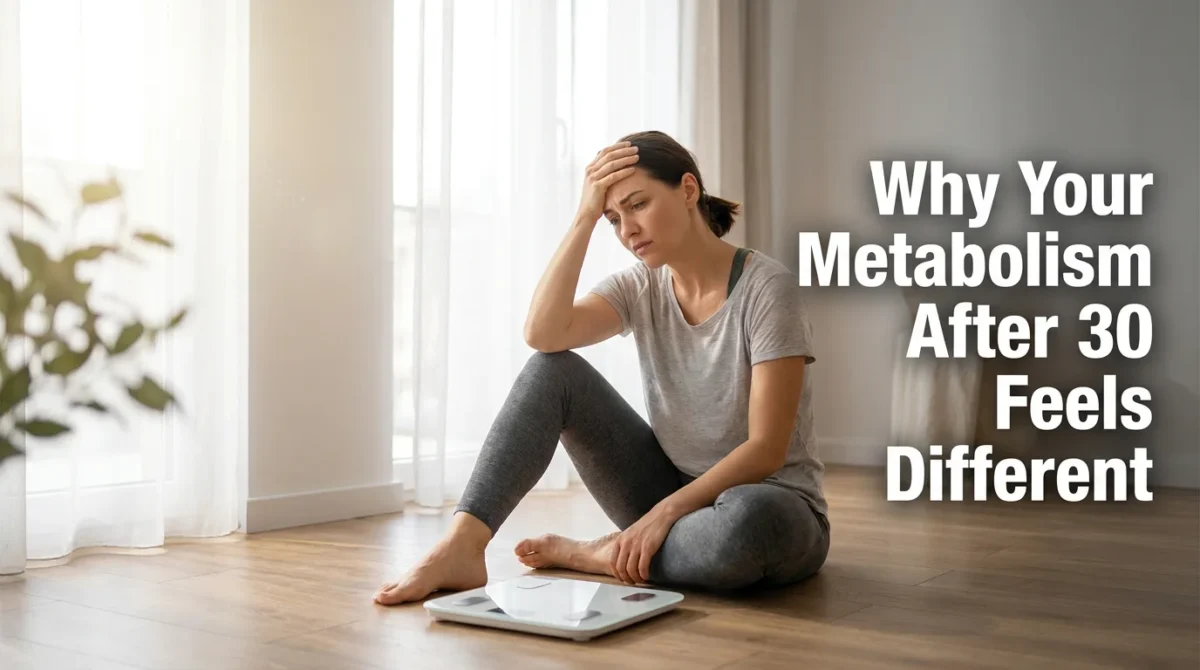
Metabolism after 30 changes for many women, but not always in the way social media says. This guide covers the signs to watch for, five research-supported reasons, and what to do first.

Metabolism After 30: How to Tell What Has Changed, and What to Do First
If you have been eating better and moving more but still feel stuck, there may be real reasons. Here are the signs to notice, what research supports, and where to start.
For many women, the missing piece is not discipline. Metabolism after 30 does change for some people, though not always in the way social media describes. A large 2021 study in Science found that metabolic rate, adjusted for body size, stays fairly stable between ages 20 and 60. So what is going on?
This page covers the signs, the main reasons, and a simple plan. For a deeper look at the causes, read our guide to the slow metabolism after 30 reasons.
What Actually Happens to Metabolism After 30
For most women, the first signs are subtle.
You feel more tired. Weight becomes easier to gain and harder to lose. Even when you do the right things, results feel slower than they used to.
Metabolism is the process your body uses to turn food into energy. According to Mayo Clinic, people tend to lose muscle with aging, and more of the body’s weight is from fat, which slows calorie burning. That is one reason metabolism after 30 can feel different, even when the underlying rate is stable.
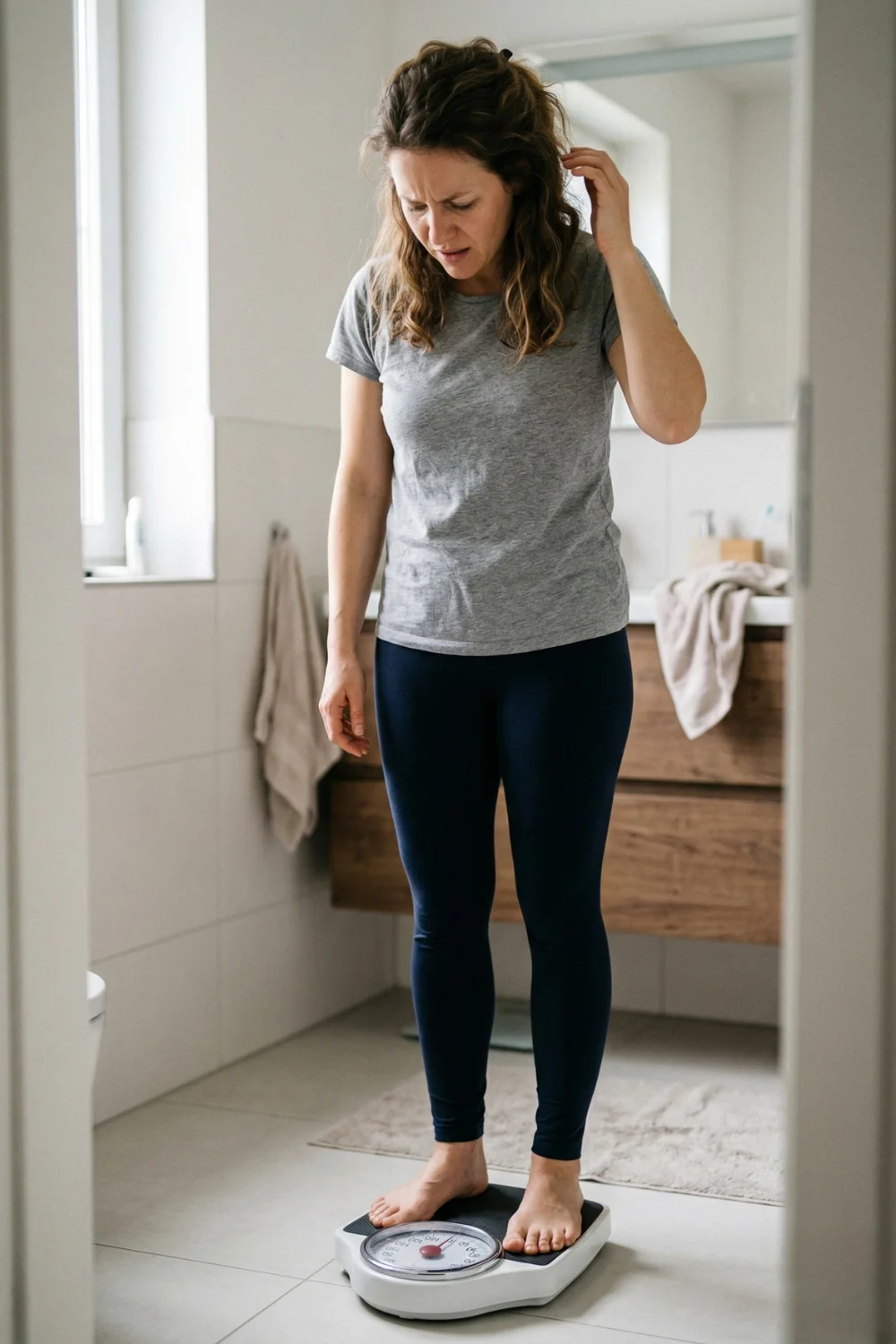
5 Reasons Your Metabolism After 30 May Feel Slower
1. Muscle Mass Declines With Age
Muscle burns calories even at rest. Cleveland Clinic says you may lose as much as 8% of your muscle mass each decade, so keeping muscle matters.
2. Daily Movement Quietly Drops
Mayo Clinic says non-exercise activity, such as housework, gardening and even fidgeting, accounts for about 100 to 800 calories used daily. Small drops add up.
3. Sleep Gets Shorter
Mayo Clinic says insufficient sleep can lead people to snack more and to eat and drink more calories.
4. Stress Hits Harder
Mayo Clinic notes that stress can change the way your body functions in ways that lead to weight gain.
5. Hormones Shift Around Menopause
For women in perimenopause or menopause, Mayo Clinic says hormonal changes make weight gain around the belly more likely. If this may apply to you, talk with your provider.

Signs Your Metabolism After 30 May Need Attention
- You gain weight more easily than you used to
- You feel low energy through much of the day
- You struggle to lose weight even when you are consistent
- Your body feels slow to respond to changes in diet or exercise
- You feel like your routine should be working better than it is
If this sounds familiar, you are not alone. These signs of a changing metabolism after 30 are common, and they are not specific. Tiredness and weight changes can also have medical causes, so see your healthcare provider if you feel unusually tired or your weight changes without explanation.
Willpower is rarely the missing piece. Muscle, movement, sleep, and stress are often easier to change than people expect, and each one works on a different part of the picture.
First Steps That Support Metabolism After 30
Healthy habits are the foundation. These five have the best support in the sources we reviewed.
Strength Training
The CDC recommends at least 2 days of muscle-strengthening activity each week. Mayo Clinic says that as you gain muscle, your body burns calories better.

Protein at Each Meal
Cleveland Clinic recommends high-quality protein at each meal to help maintain muscle.

Daily Movement
Walking more and staying active through the day, not just during workouts, adds to total calorie use. The CDC also recommends 150 minutes of moderate-intensity activity a week.

Sleep Quality
Mayo Clinic recommends at least seven hours of sleep for a healthy adult.

Stress Management
Because stress can change how your body functions, a few minutes of calm each day, such as a short walk or quiet breathing, is a reasonable habit to try.

What if you do all of this and still feel stuck? Give the habits time. The CDC describes about 1 to 2 pounds a week as a realistic pace of weight loss, and many people lose less. If progress still stalls, talk with your provider before you try anything else.
Brown Fat and Metabolism After 30: A Quick Look
Some pages mention brown fat or “cellular energy” as a factor in metabolism after 30. Here is a plain-language look at what it is and where to read more.
Brown Fat in Plain Terms
- Brown fat (brown adipose tissue) is a type of fat that burns energy to produce heat. Adults have it, and researchers are studying its role in energy balance.
- Muscle, daily movement, sleep and stress are the factors Mayo Clinic and the sources above point to for everyday calorie burn.
- Some formulas are built around a citrus-based morning ritual. If you consider one, read the label for doses and ask your provider about safety.
For what human studies actually show about stress hormones and brown fat, read Cortisol and Brown Fat: 5 Things the Research Says.
What to Evaluate Before Trying Any Metabolism Supplement
If you are still curious about supplements for metabolism after 30, use this short checklist first:
Have you read the full label for ingredients, amounts and other ingredients?
Have you looked up each ingredient on trusted sources such as NIH or NCCIH, including the safety notes?
Have you asked your provider, especially if you are pregnant, take medicines, or have a heart condition or high blood pressure?
Our Metabolism Hack guide walks through one popular formula with these questions in mind.
Related Reading
If You Have Been Feeling Stuck, Start Here
Keep the good habits in place, check in with your provider, and use the habits above as your foundation.
Metabolism after 30 is something you can influence, mostly through muscle, movement, sleep, and stress. You do not have to change everything at once.
P.S. Not sure where to begin? Pick one habit from the list above and repeat it for two weeks before you change anything else.
These statements have not been evaluated by the Food and Drug Administration. This product is not intended to diagnose, treat, cure, or prevent any disease. Individual results may vary. Always consult a qualified healthcare provider before starting any supplement regimen. This page contains affiliate links — if you purchase through them, we may earn a commission at no additional cost to you.