
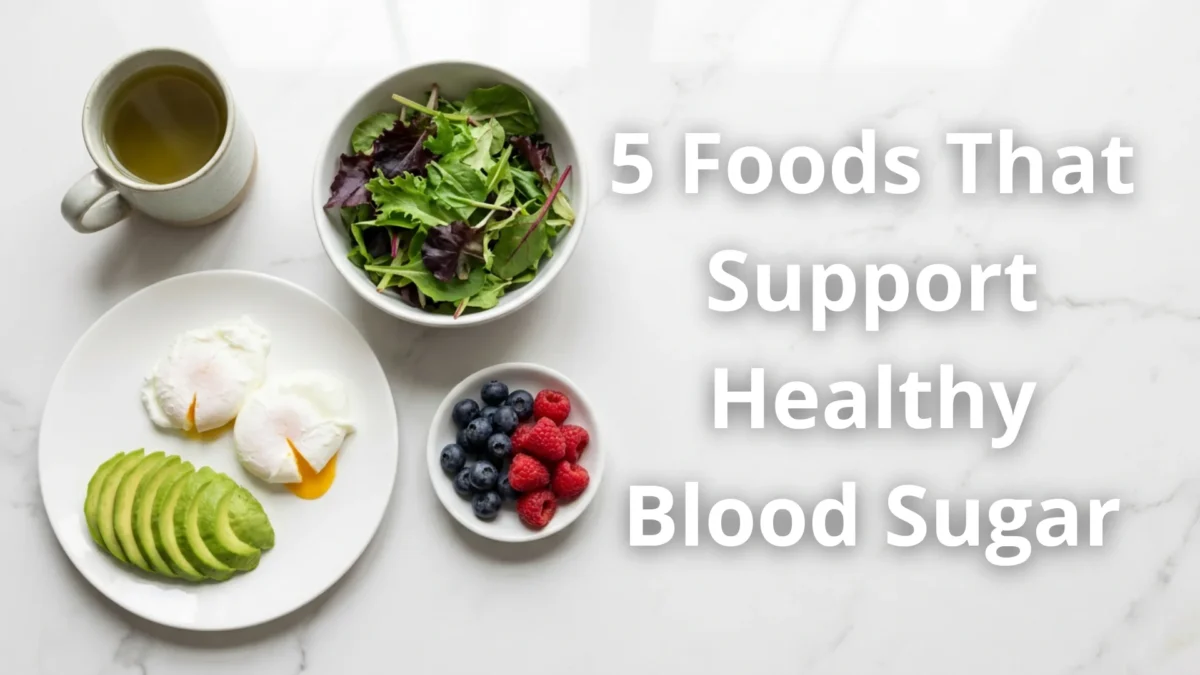
Foods that support healthy blood sugar after 40 may go beyond cutting sugar. Specific nutrients and food combinations may influence how your body handles glucose after meals, which is why choosing foods that support healthy blood sugar is only part of the picture.

Foods That Support Healthy Blood Sugar After 40 — And the Ones That Work Against You
Choosing foods that support healthy blood sugar should help. But for many adults over 40, the wrong “healthy” foods — and a hidden cellular issue — may still leave glucose levels unstable.
Why Foods That Support Healthy Blood Sugar Matter More After 40
After 40, many people notice something frustrating: the same meals that used to feel harmless suddenly lead to fatigue, cravings, brain fog, or a heavy afternoon crash.
You may cut back on dessert, avoid soda, switch to whole-grain options, and still feel like your blood sugar has a mind of its own. That does not mean you are failing. It may mean your body processes glucose differently than it used to.
Food matters. But the real goal is not simply “eating less sugar.” The goal is to build meals around foods that support healthy blood sugar by helping your body release glucose more gradually, respond to insulin more effectively, and avoid the sharp spikes and crashes that leave you exhausted.
The key idea: Blood sugar stability is not only about what you remove from your plate. It is also about what you add — protein, fiber, healthy fats, and nutrients that support steady glucose response.
5 Foods That Support Healthy Blood Sugar for Many Adults
Protein-Rich Eggs
Eggs provide protein and healthy fats without adding a large carbohydrate load. For many adults, a protein-centered breakfast may help reduce mid-morning hunger and support healthy blood sugar levels through the morning.
Leafy Greens
Spinach, kale, arugula, and other greens are low in starch and rich in minerals. They add volume to meals without creating the same glucose burden as refined carbohydrates.
Avocado
Avocado contains fiber and monounsaturated fats that may help slow digestion. Adding it to a meal can make the meal feel more satisfying and reduce the urge to snack shortly afterward.

Berries Instead of Sweet Snacks
Berries provide natural sweetness with fiber and polyphenols. They are not “free food,” but they are often a smarter choice than pastries, candy, or sweetened breakfast foods.
Nuts and Seeds
Almonds, walnuts, chia seeds, and flaxseed offer healthy fats, fiber, and minerals. In reasonable portions, they may help support healthy blood sugar stability and reduce the likelihood of a fast energy crash after meals.
Simple plate rule: Start with protein, add non-starchy vegetables, include healthy fat, and keep fast-digesting carbohydrates modest. This combination may help reduce the glucose swing after meals and support healthy blood sugar throughout the day.
Small Habits That Help Foods That Support Healthy Blood Sugar Work Better
The same food can behave differently depending on how you eat it. A piece of fruit on its own tends to move through your system faster than the same fruit eaten with a handful of nuts or a spoonful of yogurt without added sugar. Pairing carbohydrates with protein, fiber, or healthy fat is one of the simplest ways to soften the glucose swing after a meal.
Timing and portion size matter too. A very large meal after a long gap without eating can produce a bigger spike than the same food spread across the day, and eating protein and vegetables before starches is a habit some people find helpful. None of these changes needs to be perfect. They are starting points you can test against how you actually feel in the two to three hours after eating.
If you try foods that support healthy blood sugar consistently and still notice crashes, cravings, or fatigue, that is useful information. It is the reason the next section looks at what may be happening beyond the plate.
But What If You Already Eat Foods That Support Healthy Blood Sugar — And Still Struggle?
This is where many adults over 40 get confused. They improve their diet, choose better foods, and still experience unpredictable blood sugar patterns.
If that sounds familiar, the issue may not be willpower or food choices alone. A growing body of research in metabolic medicine is paying closer attention to what happens after glucose enters the bloodstream — especially how efficiently cells respond to glucose signals even when people choose foods that support healthy blood sugar consistently.
3 Foods That Quietly Sabotage Blood Sugar
Choosing foods that support healthy blood sugar is only half of the picture, because some foods look healthy on the surface but may still create a fast glucose response, especially when eaten alone or in large portions.
1. Sweetened Yogurt
Many flavored yogurts contain more added sugar than people expect. Even “low-fat” versions can create a faster glucose rise because the fat is removed and sugar is added for taste.
2. Breakfast Cereal and Granola
Granola and boxed cereal often look like healthy breakfast choices, but many versions combine refined grains, sweeteners, and dried fruit. That combination can be difficult for blood sugar stability.
3. Fruit Juice and Smoothies Without Protein
Juice removes much of the fiber from whole fruit. Smoothies can also become a sugar-heavy drink when they rely mostly on fruit and lack protein, fiber, or healthy fat.
The goal is not fear. The goal is awareness. Many people do better when they stop thinking in terms of “good” or “bad” foods and start thinking about glucose response, meal timing, and cellular energy.
Why Some People Still Struggle Despite Eating Foods That Support Healthy Blood Sugar
Food is the first layer — but it is not the only one that matters. Choosing foods that support healthy blood sugar is the right starting point, but glucose still needs to reach your cells efficiently to produce the energy and stability you are looking for.
For glucose to leave the bloodstream and be used for energy, your body relies on a chain of signals. Insulin has to communicate properly. Cells have to respond properly. Glucose has to be transported into the cells efficiently.
When that process slows down, even careful eating may not produce the results you expect. Blood sugar becomes harder to keep stable, cravings may return, and energy can drop after meals.
Stable Blood Sugar Depends on More Than the Food Itself
A growing body of evidence in metabolic medicine is looking beyond the plate and studying how cellular glucose transport may affect healthy blood sugar stability as people age.
- How quickly glucose enters the bloodstream
- How strongly insulin signaling responds
- How effectively cells allow glucose inside
- How age-related changes affect energy after meals
What Researchers Are Investigating Beyond Foods That Support Healthy Blood Sugar
Evidence in metabolic research suggests that the ability to support healthy blood sugar fully may involve more than diet and food choices alone. Researchers in exercise physiology and endocrinology are studying how the body moves glucose from the bloodstream into cells, and why that process may become less efficient with age.
One area of growing interest involves cellular glucose transport systems — including proteins that help move glucose into muscle and fat cells after insulin signals are released.
When these systems are working well, it becomes easier to support healthy blood sugar levels throughout the day. When they become overwhelmed or less responsive, glucose may stay elevated longer than expected even when the person is making better food choices.
A 2020 review of aging skeletal muscle and insulin resistance reports that older men showed lower glucose metabolism and lower skeletal muscle GLUT4 expression than younger men. That does not prove GLUT4 explains every case of unstable blood sugar, but it gives researchers a concrete place to look.
This is why some people feel frustrated: they are focused only on the foods entering the body, while the bigger issue may involve what happens at the cellular level after the meal.
Eating Better Is a Great First Step — But It May Not Be the Whole Story
If you have improved your diet with foods that support healthy blood sugar and still feel trapped by cravings, fatigue, or unpredictable glucose patterns, there may be a deeper mechanism worth understanding.
The free presentation below explains the hidden cellular process researchers are investigating — and why choosing foods that support healthy blood sugar may not be enough on its own when this mechanism is not working efficiently.
Note: This presentation is educational and is designed for adults over 40 who want to understand why blood sugar problems may persist despite better nutrition.
Related Reading
This content is for informational purposes only and does not constitute medical advice. Individual results may vary. These statements have not been evaluated by the Food and Drug Administration. This product is not intended to diagnose, treat, cure, or prevent any disease. Always consult a qualified healthcare provider before making changes to your health routine or supplementation program. This page contains affiliate links — if you purchase through them, we may earn a commission at no additional cost to you.