

Blood sugar spikes in the morning can happen even when you have not eaten — and the reason involves overnight glucose regulation, not just what you had for dinner.

Why Your Blood Sugar Is High In The Morning Even When You Don’t Eat Anything
If your glucose reading is already elevated before breakfast, it can feel confusing and unfair. But morning blood sugar spikes may have more to do with overnight biology than with anything you ate that morning.
The Morning Number That Makes No Sense
You wake up. You have not eaten. You have not had coffee with sugar. Maybe you even went to bed feeling like you did everything right the day before.
Then you check your blood sugar and the number is higher than expected.
For many adults over 40, this becomes one of the most frustrating parts of managing glucose. The morning reading feels like proof that something is wrong — but the usual explanation, “you ate too many carbs,” does not always fit.
Important: Morning blood sugar can rise even when you have not eaten anything. This pattern is commonly linked to overnight glucose regulation, hormone rhythms, and the way your body prepares you to wake up.
What Is the Dawn Phenomenon?
The “dawn phenomenon” is a term used to describe a natural rise in blood sugar that can happen in the early morning hours, often before you wake up.
Your body is not completely inactive while you sleep. In the hours before morning, it begins preparing you for the day. Certain hormones may signal the liver to release stored glucose into the bloodstream so your brain and muscles have available energy when you wake.
In a healthy glucose response, the body manages this rise smoothly. Insulin signaling helps move glucose out of the bloodstream and into the cells where it can be used.
But when glucose regulation is already under stress, that same morning release can lead to a higher fasting reading.
In simple terms: your morning blood sugar may be high not because you ate overnight, but because your body released glucose overnight — and your cells may not be responding as efficiently as they once did.
Why This Pattern Often Shows Up After 40
Many people notice that blood sugar becomes harder to predict with age. Meals that used to be fine suddenly create bigger swings. A normal dinner may lead to a confusing morning reading. Energy may feel less stable than it did years ago.
Several age-related factors may contribute to this pattern:
Overnight Liver Glucose Release
The liver stores glucose and can release it while you sleep. When regulation is less efficient, this release may push morning levels higher than expected.
Changing Hormone Rhythms
Morning hormones help your body wake up. These same signals may also influence glucose availability, especially when the body is already struggling with metabolic balance.
Reduced Cellular Response
As people age, cells may become less responsive to the signals that help move glucose out of the bloodstream and into the tissues.
Poor Sleep And Stress
Sleep disruption and stress may influence glucose patterns by affecting the hormones involved in overnight energy regulation.
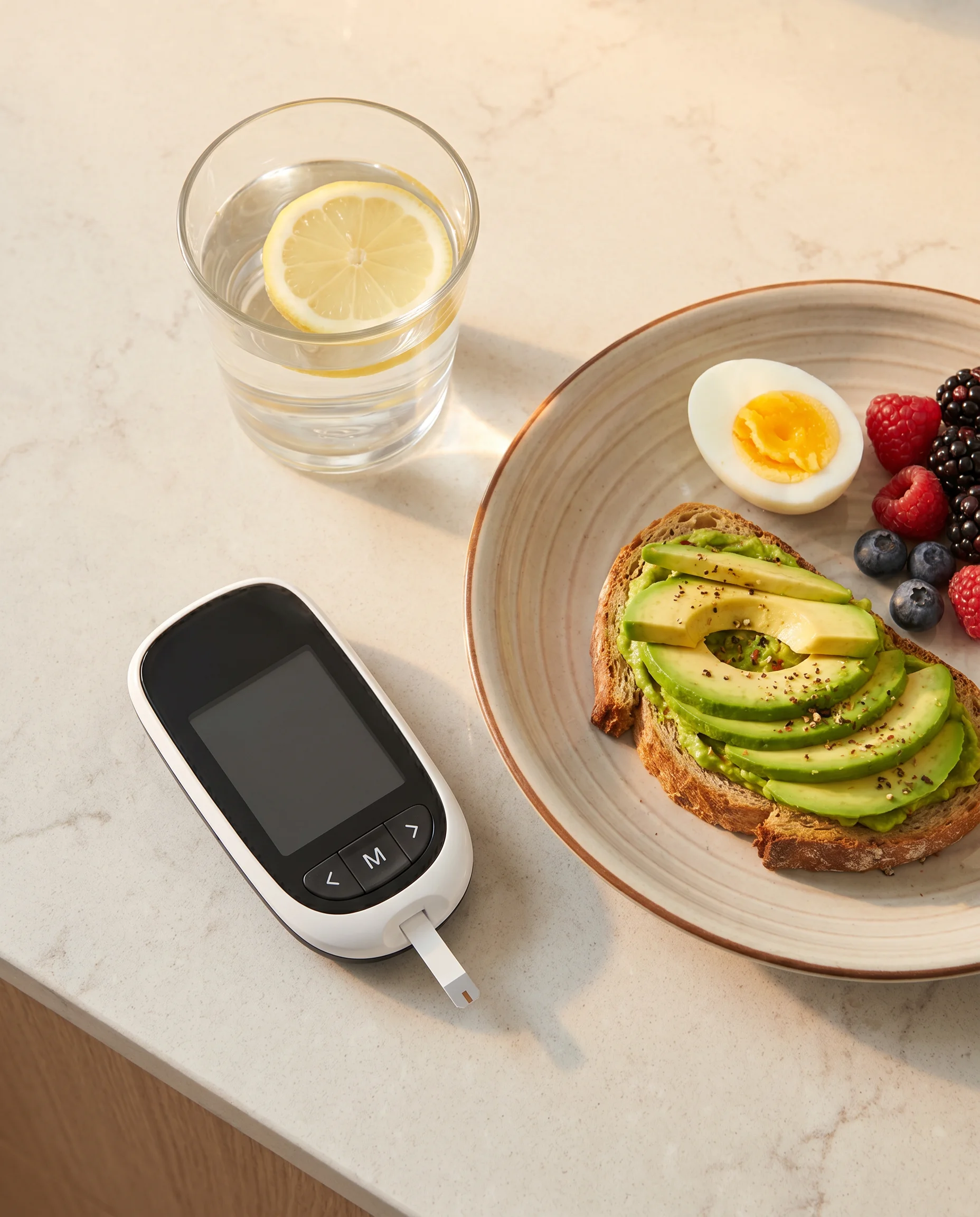
When Diet Alone Does Not Explain It
It is easy to blame yourself when the morning number looks wrong. But if your blood sugar is high before you eat, the issue may not be about the breakfast you have not even had yet.
It may be a sign that your body is struggling with what happens after glucose enters the bloodstream — especially how efficiently that glucose is moved into your cells.
What Researchers Are Investigating
Researchers continue to study why blood sugar regulation becomes more difficult with age, especially in people who feel they are making reasonable food choices but still see unstable glucose patterns.
One area of interest is cellular glucose transport — the process that helps move glucose from the bloodstream into the cells where it can be used for energy.
This process depends on several signals working together. Insulin must communicate properly. Cells must respond. And specialized glucose transport systems must help move glucose to the right place.
Morning Spikes May Not Be Just a Food Problem
When glucose transport becomes less efficient, blood sugar may remain elevated even when food intake seems controlled. That is why some adults over 40 experience morning highs, afternoon crashes, cravings, and fatigue as part of the same pattern.
The key question researchers are asking is not only “how much sugar entered the body?” but also “how well are the cells receiving and using that glucose?”
This is where the conversation becomes deeper than diet alone. The next step is understanding the hidden cellular mechanism that may influence blood sugar after 40.
Your Morning Blood Sugar May Be Telling You Something
If your blood sugar is high before breakfast, it may be a sign that your overnight glucose regulation needs a closer look.
The free presentation below explains the hidden mechanism researchers are studying, why glucose may stay elevated even when you are trying to make better choices, and what may be happening inside your cells after 40.
Note: This educational presentation is designed for adults who want to understand what may be happening beneath the surface of unstable blood sugar patterns.
Related Reading
This content is for informational purposes only and does not constitute medical advice. Individual results may vary. These statements have not been evaluated by the Food and Drug Administration. This product is not intended to diagnose, treat, cure, or prevent any disease. Always consult a qualified healthcare provider before making changes to your health routine, diet, medication, or supplementation program. This page may contain affiliate links — if you purchase through them, we may earn a commission at no additional cost to you.