How Metabolism Really Works — And Why It Slows After 30

Metabolism is the chemical engine that powers every cell in your body. Here is how it actually works, why it shifts after 30, and what the research says about supporting it effectively.
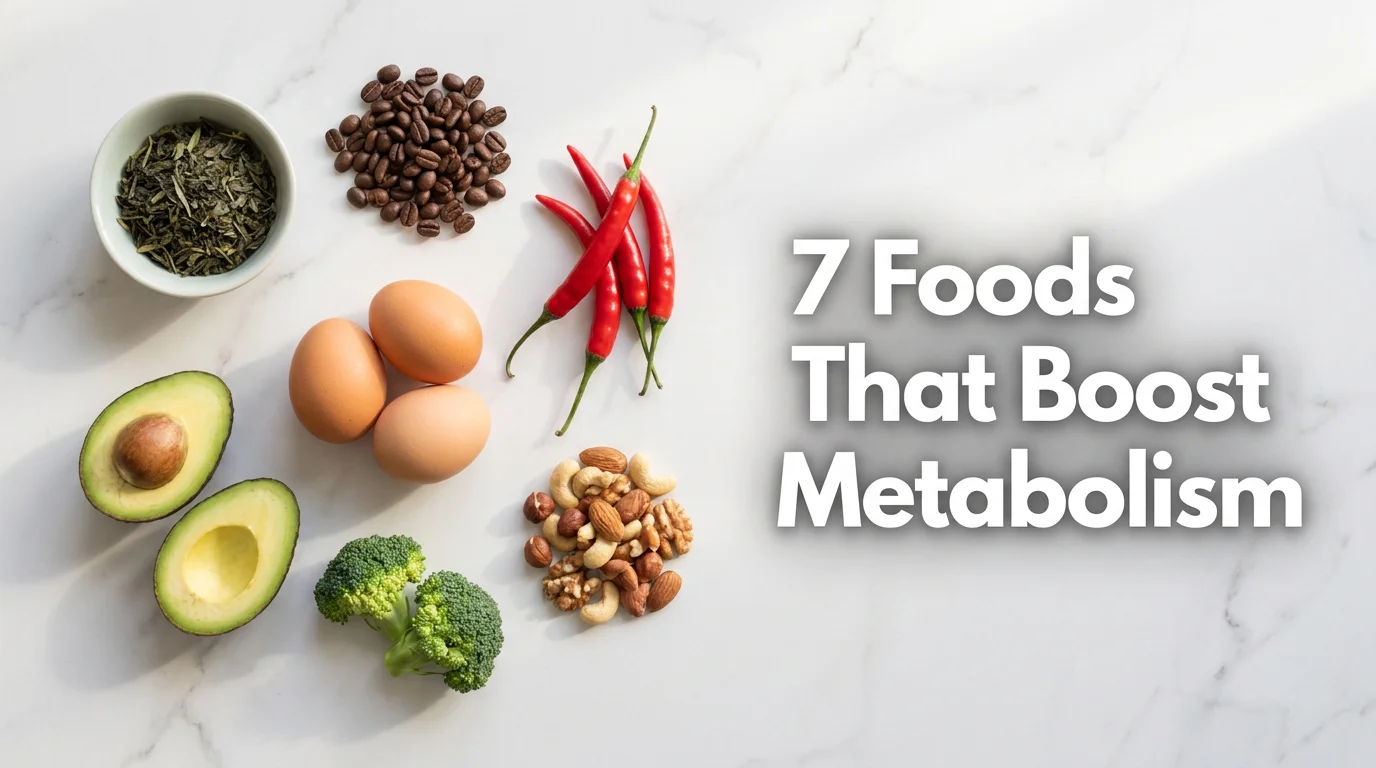

These 7 foods work through real biological mechanisms — not marketing claims. Here is the science behind each one and how to use them strategically for maximum metabolic effect.
Optimizing metabolism is not about extreme measures. These 7 consistent daily habits create the biological environment where fat burning becomes the default state over time.
Eating less and moving more but the scale will not move? Here are 5 biological reasons why — and none of them have anything to do with willpower or discipline.
Until cortisol drops, your metabolism stays in fat-storage mode no matter what you eat. Here are 5 evidence-based strategies that directly address the cortisol-metabolism axis.
You are eating less and moving more — but the weight will not move. Before blaming willpower, check your cortisol. Here is exactly how chronic stress blocks fat loss.
The belly fat that won’t move despite diet and exercise may not be a discipline problem — it may be a cortisol problem. Here is the exact hormonal mechanism behind it.
The first 45 minutes after waking set your hormonal baseline for the entire day. Here are 5 steps that anchor your cortisol at a healthy level and prime your body for fat burning.
Chronic stress does not just make you feel bad — it suppresses your body’s most powerful fat-burning system. Here is the science behind the cortisol-BAT connection and how to break the loop.
Your metabolism does not shut down when you sleep — it shifts into recovery mode. These 4 night habits determine whether that window works for you or against you.